
Hyderabad’s office market is entering a phase where quality is becoming as important as quantity, if not more so.
In Q1 2026, the city recorded 3.15 million sq. ft. of gross office leasing, a 21.6% increase over the same period since last year. By H1(half yearly) 2026, leasing had reached 5.2 million sq. ft., up 25% from last year. At the same time, Hyderabad recorded no new Grade-A office supply in Q1, while Grade-A rents increased by around 12% since last year.
For companies, these numbers point towards a larger shift. The decision is no longer simply about finding an office with enough desks and a manageable rent. Companies are increasingly evaluating where they work, what the building provides and how effectively the address supports their operations and employee accommodation(like parking).
That is changing the way Grade-A office spaces in Hyderabad are being assessed.
Grade-A Means More Than a Premium Façade
A Grade-A office should be judged by how well it performs, not simply how impressive it looks. A Grade-A office space simply doesn’t mean modern aesthetics.
Building infrastructure, power reliability, vertical transportation, fire and life-safety systems, security, parking, common areas and maintenance all influence the everyday experience of occupying a great commercial property.
There is also an economic dimension to this.
An inefficient floorplan can increase fit-out expenditure. Poor building services can create operational interruptions. Inadequate parking can complicate employee and client visits. A building that is difficult to access can become a recruitment disadvantage when employees have knowledge of multiple workplace options.
In other words, the quality of an office building is experienced operationally.
The best commercial properties reduce friction rather than merely adding features.
Hyderabad’s Commercial Geography Is Becoming More Diverse
Hyderabad’s western corridor, specifically Madhapur and Gachibowli, continues to dominate large-scale office activity. A report by Cushman & Wakefield (a real estate advisory firm) suggested that Q1 data shows Madhapur accounting for a substantial share of leasing, while Gachibowli remains another major office market.
But a strong commercial market does not mean every business needs the same address.
A technology company with thousands of employees may prioritise proximity to a particular talent pool. A professional services firm may place greater emphasis on central accessibility and client convenience. A smaller enterprise like retail may value parking, surrounding services and the efficiency of its office footprint.
This makes location strategy very important than simply choosing the most recognised business district.
Established areas can have a different advantage: they already possess the infrastructure and urban activity that newer commercial clusters may take years to develop.
From Office Building to Business Ecosystem
This is where the idea and meaning of a commercial hub becomes more interesting.
An office is connected to everything around it. Employees leave the building for meals and errands. Clients need to arrive, park and move through the property comfortably. Businesses interact with nearby retailers, service providers and other commercial establishments.
The surrounding ecosystem hence also becomes part of the workplace experience.
A useful commercial address is not necessarily one surrounded by dozens of amenities. However, it is one where the right combination of connectivity, services, infrastructure and activity(like recreational and food) makes everyday business more efficient.
This is particularly relevant when considering well-known locations such as Ranigunj in Secunderabad.
The Case for Established Commercial Locations
Ranigunj has always occupied a special place within Secunderabad’s commercial landscape. Its value is not based on being the newest business district in Hyderabad(or Secunderabad for this matter), but on being part of a long-existing urban network.
That distinction matters.
Businesses choosing an office are also choosing a commute pattern, a client-access pattern and a lively, close-to-home operating environment. An established location like this can provide familiarity and connectivity that support these requirements.
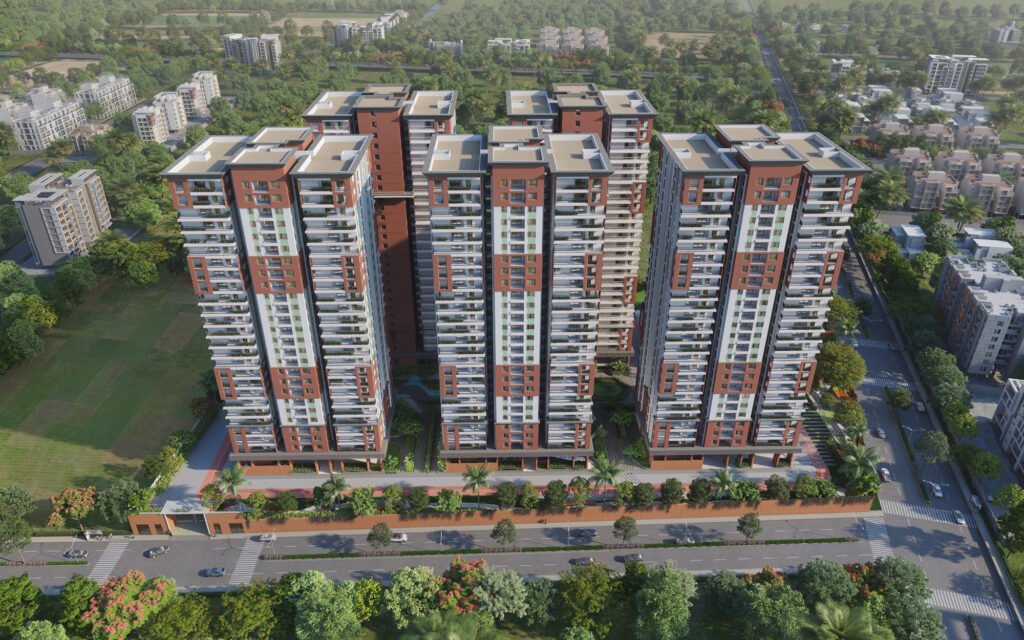
This broader approach can also be seen in developments such as T19 by Namishree. Rather than treating commercial space as an isolated component, T19 brings its commercial tower into a larger mixed-use development in Ranigunj. Namishree describes the project as a 3-acre development with 67 residential units alongside a commercial tower containing office spaces.
The commercial component includes corporate office and retail spaces, creating a relationship between workplace activity and the wider existing natural development around it.
The significance here is less about the feature list and more about the underlying model; commercial space can gain value from being part of a functioning urban environment, rather than existing independently from it.
The Economics of Choosing an Office
For businesses considering office space for rent in Hyderabad, leasing remains an attractive option because it offers flexibility. Companies can preserve capital and modify their footprint as their workforce changes.
Buying commercial property for sale in Hyderabad introduces some different calculations. The decision should consider not only acquisition costs but also rental potential, tenant demand, maintenance, accessibility, parking, construction quality and the future relevance of the location.
This is especially important in a market where Grade-A rents are rising and quality supply remains constrained. The underlying question is therefore not simply:
“What does this property cost today?”
It is:
“How useful and commercially relevant will this property remain over time?”
A Better Way to Evaluate Office Space
Businesses comparing commercial properties can use a more practical framework:
1. Location: Does it work for employees, clients and visitors?
2. Building performance: Are power, lifts, safety, security and essential systems dependable?
3. Space efficiency: Can the available area support the company’s actual workflow?
4. Accessibility: Is the property connected to the parts of the city that matter to the business?
5. Parking: Can employees and visitors be accommodated without unnecessary friction?
6. Surrounding ecosystem: Are essential services and commercial activity available nearby?
7. Long-term relevance: Can the property remain useful if the company’s requirements change?
This approach shifts the conversation from “How much space are we going to get?” to “How effectively can we operate from here?”
The New Value of a Business Address
Hyderabad’s evolving commercial market reflects a clear shift in how businesses analyse office spaces. As demand continues to grow across GCCs, IT-BPM, BFSI, healthcare, pharmaceutical, engineering and flexible workspace sectors, the value of a commercial address increasingly extends beyond size or appearance. Location, infrastructure, accessibility, space efficiency, parking lots and the surrounding ecosystem are becoming integral to long-term business performance.
For businesses, this means that the right office is no longer simply a space to accommodate employees. It is an environment that can influence daily productivity, employee convenience, client experience, operational efficiency and the ability to adapt and change as the organisation grows further. For investors, the same factors can determine the long-term relevance, tenant appeal and commercial potential of a property.
Established commercial locations are gaining renewed relevance as businesses look beyond the office itself to the ecosystem around it. Strong connectivity, existing infrastructure and an active urban environment can offer advantages that newer business districts may take years to develop. Projects such as T19 by Namishree in Ranigunj reflect this broader direction, bringing contemporary commercial spaces into an established urban setting.

This is driving greater interest in commercial developments that bring together quality office infrastructure, accessibility and a well-integrated surrounding environment, rather than treating the workplace as just an isolated corporate destination.
As Hyderabad’s commercial landscape continues to evolve, this integrated approach is beginning to shape a new generation of office spaces, particularly within established urban locations like Secunderabad and its various neighbourhoods.